
Controlling Urea Concentration in Real Time
The aqueous urea solution AUS32, also known as AdBlue or Diesel Exhaust Fluid (DEF), plays a crucial role in reducing harmful emissions in modern diesel engines. In vehicles in which Selective Catalytic Reduction (SCR) technology is used, this aqueous urea solution is injected into exhaust gases, where it decomposes into ammonia and converts nitrogen oxides (NOx) into harmless nitrogen and water vapor.
AdBlue is a high-purity, transparent liquid consisting of 32.5% synthetic urea dissolved in demineralized water. Maintaining this exact concentration is essential for optimal SCR performance and system longevity. Continuous monitoring of the urea concentration is therefore a critical process step in AdBlue production. These catalytic reduction systems are highly sensitive to impurities or contamination in AdBlue/DEF, which may lead to severe damage, malfunction, or costly downtime of the SCR components.
Why Urea Concentration Monitoring in Automotive AdBlue/DEF Production Is Essential
The production of AdBlue involves mixing high-purity urea with demineralized water under controlled conditions. Typical process temperatures range from 25 °C to 50 °C, followed by cooling before storage. Alternatively, AdBlue can be produced by dissolving solid urea granules in heated water at 40–45 °C, allowing rapid formation of the final solution.
In both production routes, precise control of the concentration is mandatory. According to ISO 22241, every produced batch must maintain a urea concentration of 32.5%, and deviations beyond ±0.8% must be avoided. Even minor deviations can:
- Reduce NOx conversion efficiency
- Damage SCR system components
- Increase operational and maintenance costs
Traditional offline, laboratory-based analysis methods are time-consuming and do not allow immediate corrective actions. Real-time monitoring is therefore essential for modern process control.
Refractive Index as a Process Analytical Tool (PAT) for Real-Time Monitoring of AdBlue Concentration
The refractive index (RI) is a reliable and widely accepted parameter for determining the concentration of urea solutions. It provides direct information about the composition of the liquid and enables continuous monitoring of the production process.
By converting the refractive index into a calibrated urea or AdBlue concentration scale, the process can be controlled in real time.
Inline refractive index measurement enables:
- Immediate detection of concentration deviations
- Automated adjustment of water dosing
- Stable and reproducible product quality
For optimal process control, the
process refractometer should be integrated upstream of the filling stage and before transfer into the storage tanks. Depending on the plant design, the sensor can either be installed directly into the pipeline system via suitable process connections or mounted in a buffer or conditioning tank positioned before the storage tanks.
Based on the measured concentration values, the digital outputs of the refractometer can be used to control valves automatically. This allows corrective dosing of either concentrated urea solution or water in order to adjust and maintain the required AdBlue/DEF concentration within specification.
Solution from SCHMIDT + HAENSCH
for Urea Concentration Measurement in Automotive AdBlue/DEF Production
SCHMIDT + HAENSCH has developed advanced inline refractometer solutions for reliable and highly accurate monitoring of AdBlue/DEF concentration in industrial automotive urea production processes. The SCHMIDT + HAENSCH analysis method is performed according to ISO 22241 requirements for AdBlue/DEF quality control.
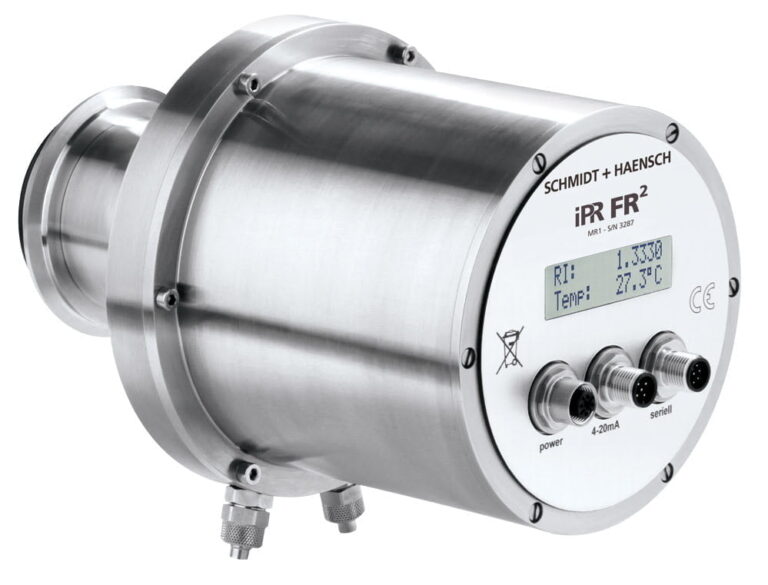
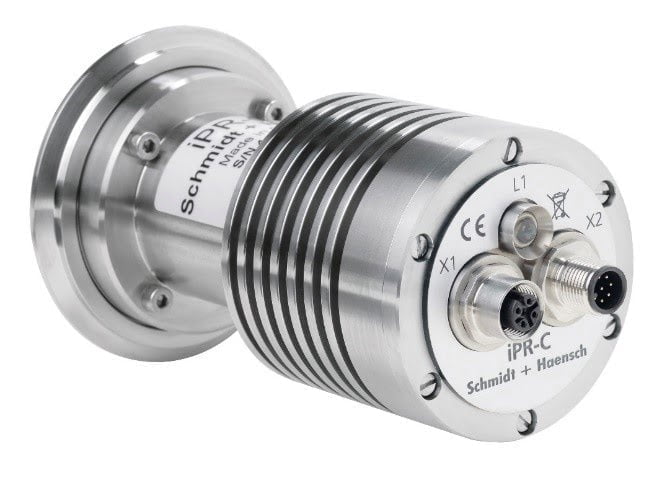
Using the SCHMIDT + HAENSCH Full-Range Inline Process Refractometer
iPR FR² or Compact Inline Refractometer
iPR C² provides a robust and reliable solution for real-time monitoring of urea concentration during AdBlue/DEF production processes.
Installed downstream of the heat exchanger and upstream of storage or filling, the refractometer continuously measures the concentration of the urea solution and ensures compliance with the required specification range. Since the exact AdBlue quality in percent and the DEF urea percentage are critical quality parameters in every AdBlue/DEF production process, continuous inline monitoring is essential to maintain product consistency and compliance with ISO 22241 requirements.
If concentration deviations occur, the system can automatically trigger corrective dosing of demineralized water via digital output signals, ensuring stable product quality and efficient process control throughout production.
For batch production using urea granules, the refractometer can be installed directly in the mixing tank. It monitors the dissolution process and controls dosing in real time, enabling fast and efficient production.